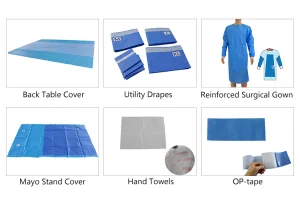
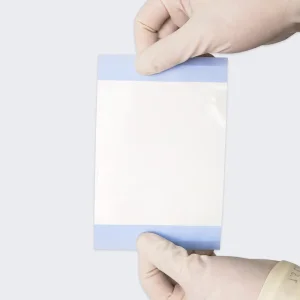
Explore our top-tier medical products engineered for contamination control, infection prevention, and patient care diagnostics.
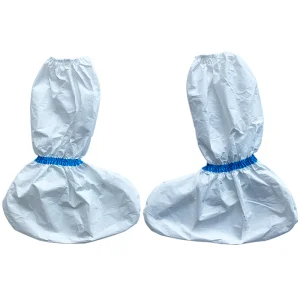
A comprehensive analysis of sourcing vectors, polymer textile technology, and factory quality standards for healthcare procurement directors.
The global demand for high-caliber medical protective apparel, specifically medical scrubs and surgical gowns, has shifted from mere basic cotton garments to advanced engineered barrier systems. Professional healthcare settings require apparel that balances ergonomic comfort with dynamic barrier protection. Standard poly-cotton blends are being augmented with hydrophobic finishes, silver-ion antimicrobial coatings, and carbon-infused anti-static filaments to ensure the wearer is shielded from pathogens while working in high-stress, moisture-rich environments.
In high-risk surgical corridors, the materials are subjected to rigorous evaluation under AAMI (Association for the Advancement of Medical Instrumentation) standards, ranging from Level 1 to Level 4 liquid barrier performance. Modern manufacturers now implement composite fabrics such as SMS (Spunbond-Meltblown-Spunbond) and SSMMS. These structured textiles provide high tensile strength and puncture resistance while incorporating a micro-porous interior layer that allows heat and sweat vapor to escape, minimizing heat stress during long procedures.
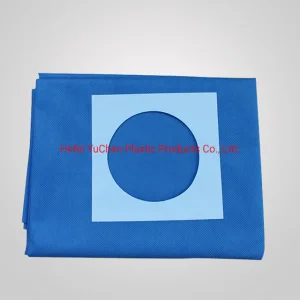
Procuring medical scrubs and disposable drapes at an industrial scale demands a manufacturing partner with vertical supply chain integration. Leading factories based in China's industrial zones have engineered automated production facilities that handle raw polymer processing, yarn spinning, weaving, sterilizing, and packaging in a single continuous pipeline. This minimized transport handling reduces the risk of bioburden contamination prior to sterilization.
Furthermore, Chinese medical textile manufacturers offer unparalleled pricing models due to local availability of polypropylene resins and advanced domestic loom machinery. By optimizing production workflows with robotic cutting tools and ultrasonic sealing lines, these factories maintain minimal material waste ratios. For global distributors, this translates directly to lower per-unit costs, consistent thickness tolerances, and highly accurate dye matching across massive order batches.
Supply Chain Insight: Vertical integration allows certified factories to compress lead times by up to 35% compared to regional manufacturers reliant on imported non-woven fabrics.
At the center of high-precision sterile device fabrication is Shanghai SwellMed Medical Co., Ltd., a globally recognized manufacturer specializing in advanced single-use sterile medical devices. With a structural emphasis on clinical infection control and surgical safety, SwellMed has successfully combined technical research with practical hospital workflows. The company caters to medical distributors, healthcare groups, and international brand owners by providing scalable OEM & ODM customization.
Their core capability lies in integrating R&D with practical clinical application. Bolstered by proprietary patents and robust clinical validations, SwellMed’s product portfolio is engineered for optimal ease of use, reliable barrier defenses, and superior patient outcomes. Backed by compliance certifications including FDA registrations and CE markings under the Medical Device Regulation (MDR), SwellMed guarantees secure partnerships at every phase of the procurement life cycle.

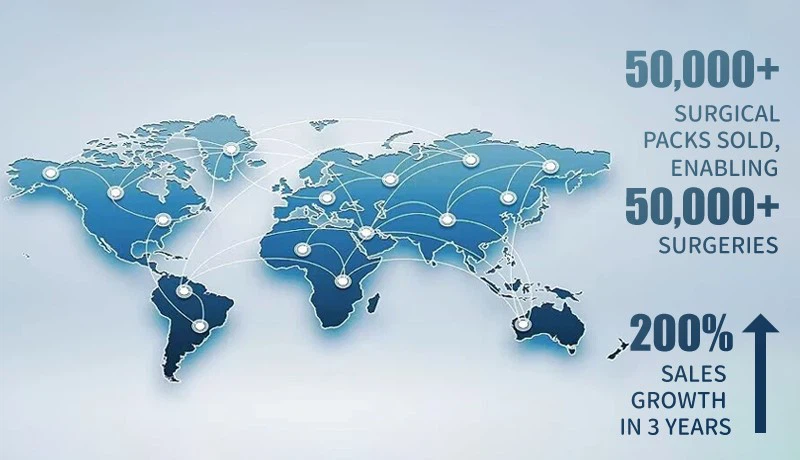
Their footprint in the international export sector has expanded, demonstrating critical performance metrics in hospital environments. Driven by surgeon confidence and documented reductions in post-operative infection risks, SwellMed has maintained a reputation as an industry innovator.
Compliance begins at the physical site of production. Our facilities feature Class 100,000 cleanroom environments conforming to ISO 14644 standards. Environmental controls systematically regulate airborne particulate concentration, humidity levels, air pressure, and ambient temperature. This prevents contamination from the initial raw material extrusion through to final product sealing.
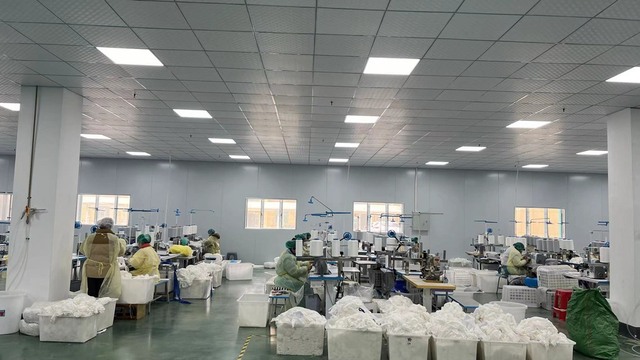
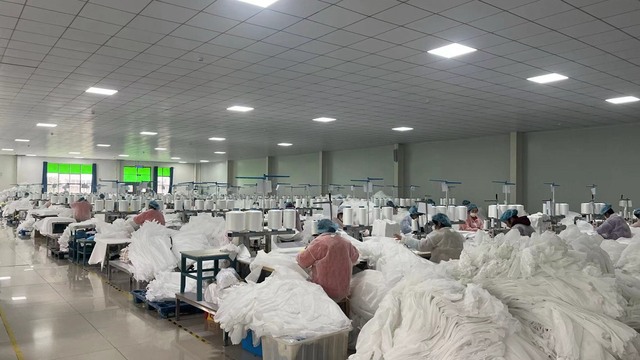
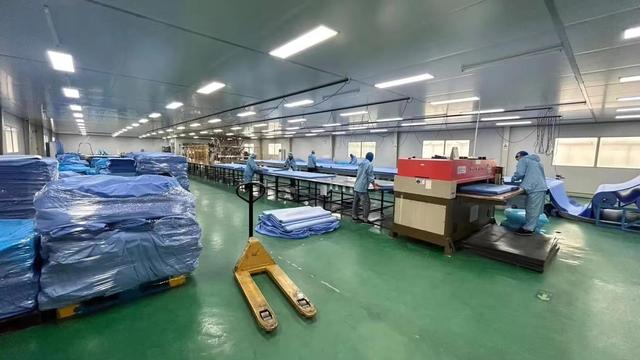
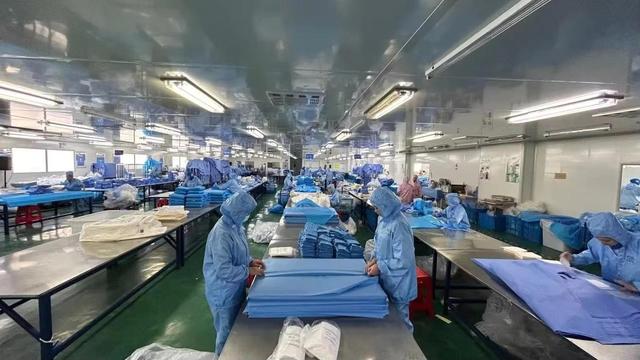
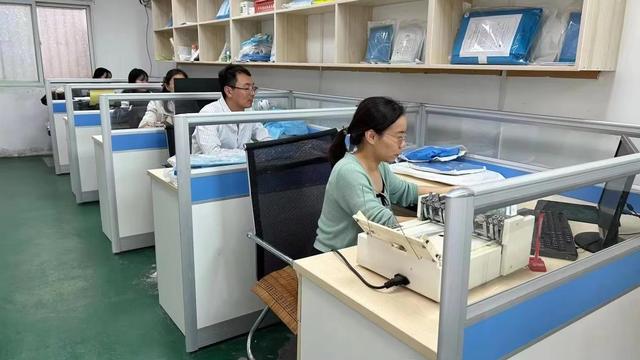
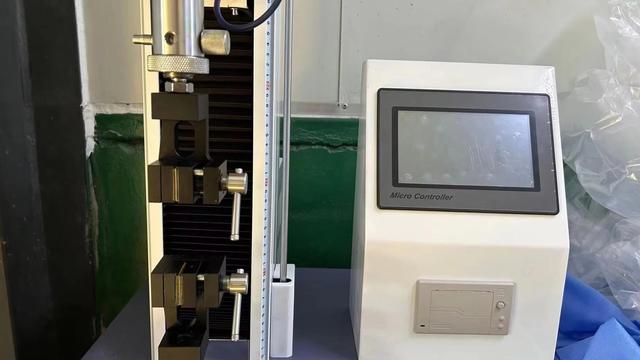
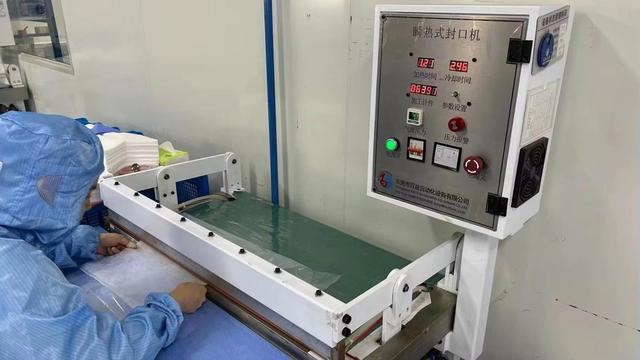
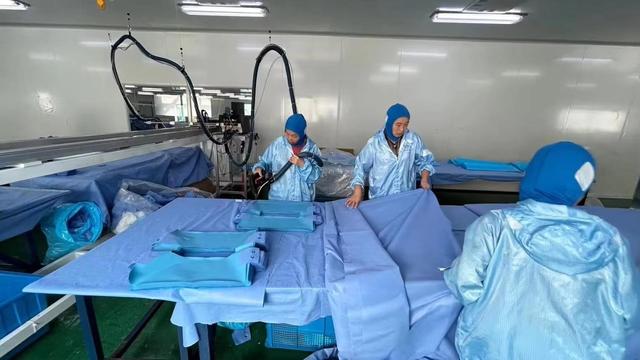
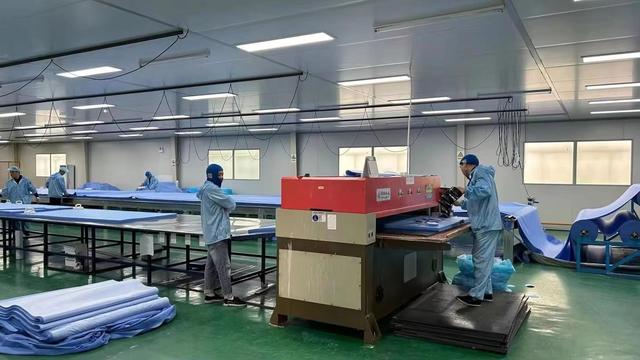
Sourcing medical wear globally involves navigating a complex web of standards. B2B purchasers must verify that manufacturing partners comply with regional requirements. For instance, European buyers demand EN 13795 certificates, while North American markets require compliance with AAMI PB70 and FDA 510(k) clearances. Ensuring these credentials are in place prevents regulatory delays at customs and protects healthcare networks from compliance liability.
Additionally, logistics coordinators must account for container space efficiency. Non-woven items and medical scrubs can be highly compressed without compromising their structural integrity. Leading factories utilize hydraulic vacuum-sealing equipment to pack products tightly, which significantly reduces shipping volume and container costs. Furthermore, having dual production hubs or integrated port access near logistics epicenters like Shanghai streamlines the container dispatch pipeline, keeping lead times consistent even during peak shipping seasons.
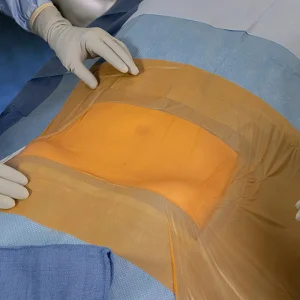
Medical scrubs and sterile drapes serve as the initial barrier against cross-contamination in multiple hospital and clinical environments:
Before committing to long-term capital contracts, ensure your manufacturing partner scores high on these criteria.
Ensure the manufacturer has active ISO 13485, CE (MDR), and FDA registrations. These certifications guarantee that the cleanrooms, production lines, and sterilization processes undergo routine independent audits.
A capable factory must provide a variety of material combinations, including SMS, Spunlace, and Poly-Cotton, with specific options for fluid resistance, anti-static properties, and antimicrobial treatments.
Reliable factories should offer flexible OEM and ODM services, allowing clients to customize sizing charts, pocket layouts, sewing styles, and packaging configurations according to local market preferences.
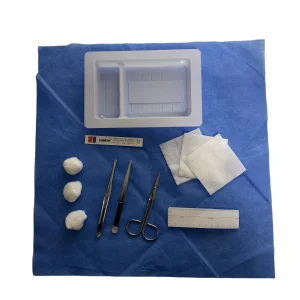
Additional medical-grade barrier products and clinical instruments designed to support contamination-free medical operations.
Crucial compliance, supply chain, and product engineering answers for healthcare procurement managers.
A qualified manufacturer must operate under ISO 13485 Quality Management Systems for Medical Devices. They must also maintain cleanrooms that comply with ISO Class 8 (Class 100,000) or higher, verified by regular testing of airborne particulate concentrations. Additional certifications like CE (MDR) for Europe and FDA registrations for the USA are mandatory regulatory thresholds.
SMS (Spunbond-Meltblown-Spunbond) features a layered structure where the meltblown layers act as a high-efficiency bacterial filter, making it ideal for fluid-repellent surgical drapes and gowns (AAMI Level 3 & 4). Spunlace is created by hydro-entangling web fibers, offering a softer, textile-like texture. Spunlace is highly absorbent and breathable, making it a common choice for patient wraps, wound dressings, and basic scrubs.
Chinese factories optimize costs through vertical integration. They manufacture non-woven fabrics directly on-site using raw polymers, reducing materials transit and markup costs. Additionally, automated cutting, ultrasonic seam welding, and high-speed packaging loops minimize labor hours and scrap rates. This enables them to offer lower per-unit costs for bulk orders.
Yes, professional factories offer complete OEM and ODM services. Customizations include adjusting fabric weights (GSM), modifying sizing matrices, altering pocket placement, adding heat-transfer logos, incorporating custom fluid collection pouches, and modifying the sterilization packaging layout to match regional surgical protocols.
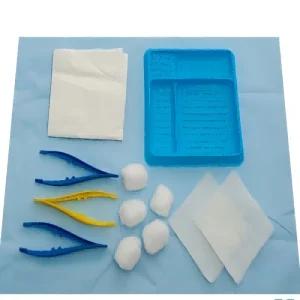
Disposable surgical drapes and procedural kits are typically sterilized using Ethylene Oxide (EO) gas or Gamma Irradiation. EO gas is preferred for complex kits containing different plastics and metal components, as it penetrates deeply without degrading the materials. Every sterilization batch must be validated with chemical indicators and biological spores to guarantee a Sterility Assurance Level (SAL) of 10^-6.
 SwellMed Medical